NNA - The United Nations Development Programme (UNDP) in partnership with the Ministry of Environment and with funding by the Global Environment Facility (GEF), launched the “Fourth National Communication on Climate Change” report. It provides a comprehensive analysis of Lebanon’s greenhouse gas emissions, vulnerabilities, and climate projections, and highlights the urgent need for action to address the challenges of climate change in the country. By providing a comprehensive overview of the country's progress and challenges, the report will inform future policy decisions and actions to address the impacts of climate change.
Many developing countries may miss out on the benefits of the “green tech” revolution unless governments and the international community take decisive action now, the head of the UN Conference on Trade and Development (UNCTAD) said on Thursday, releasing its latest report.
“We are at the beginning of a technological revolution based on green technologies,” UNCTAD Secretary-General Rebeca Grynspan said. “This new wave of technological change will have a formidable impact on the global economy.”
The 17 frontier technologies covered in UNCTAD’s Technology and Innovation Report 2023 have the potential to create market revenues of more than $9.5 trillion by 2030, about three times the size of India’s economy today.
According to the climate scenarios, although the total annual rainfall in this region is on an upward trend, the dry season will become increasingly extreme, and may be longer. The region’s ability to retain water has also been weakened due to the ongoing deforestation, a significant part of which has been for coffee cultivation and hydroelectricity.
“In rain-fed areas, the smallholder farmers in the Central Highland region, especially the poor and near poor, have been experiencing the increasingly acute shortage of irrigation water in the dry season,” said Dao Xuan Lai, the head of the Climate Change and Environment Division of the UNDP in Vietnam.
“It’s the big picture that should be considered, not just export figures,” said Lai of the UNDP. “The current coffee price [currently at record levels] does not reflect the environmental and human costs.”
Youths coming from different parts of the country were at the centre of a day-long expo yesterday that aimed to promote sustainable products and services as well as encourage innovations for climate-change adaptation.
They came up with various environment-friendly products and shared their views in interactive sessions on how people can work both in rural and urban areas to bring changes in others' lives to mitigate climate change impacts.
The Earth Society with support from Climate Parliament Bangladesh, United Nations Development Programme (UNDP), Movers, and RR-Imperial Electricals Limited organised the "Climate Expo-2023" at Gulshan Society Lake Park in the capital.
The island of Nonouti in Kiribati’s southern Gilbert group confirmed its readiness to welcome international travellers when it showcased its Community-Based Tourism (CBT) products to senior government officials and industry stakeholders. Over the last 12 months, the Kiribati Tourism Authority has made numerous trips to Nonouti to introduce the concept of Sustainable CBT to communities and local organizations on the island. These trips included scoping for potential CBT sites, soliciting community interest to participate in the initiative, and the provision of tourism support and training for these remote island communities. Supported by the project Enhancing National Food Security in the Context of Global Climate Change (known locally as 'LDCF -1') - funded by the Global Environment Facility-Least Developed Countries Fund through the UNDP and managed by the Environment and Conservation Division (ECD) under the Ministry of Environment, Lands and Agriculture Development - the initiative attracted the interest of three communities, local fishing guides, and support from the Nonouti Island Council.
The water sector in Egypt is facing a horde of challenges, such as the adverse impacts of climate at the national and global levels, and the frequency and intensity of extreme climate events, Minister of Water of Resources and Irrigation Hany Suwailam said.
Conventional farming methods in the Sundarban region (southern India and Bangladesh) are chemically intensive, harm nature and remain at the mercy of rising sea levels. One innovative project is instead seeking to work with the water, lifting farms onto floating platforms which support sustainability and restore community life. A trial of floating farms is run by the South Asian nature Forum for Environment (SAFE), supported by the Adaptation Fund. Funded by the Adaptation Fund Climate Innovation Accelerator (AFCIA), the initiative is part of the first round of AFCIA grants financed by the Fund and administered by the UN Development Programme. The project involves 12 local villages and 2,200 households, which in turn support thousands in the wider agrarian economy.
ISLAMABAD, Feb 14 (APP): Ministry of Climate Change (MoCC) and United Nations Development Programme (UNDP) Pakistan held a four-day training, supported by the Green Climate Fund, for government officials and technical teams on assembling, installing, commissioning and operating Early Warning Systems (EWS).
The intervention is aligned with the Government of Pakistan and UNDP’s mandate to mainstream environmental concerns into national and sub-national development planning processes, said a press release.
These EWS will be installed in the 24 most climate-vulnerable valleys of Gilgit Baltistan and Khyber Pakhtunkhwa.
This initiative, by UNDP’s GLOF-II project, is an important step towards climate adaptation and in building the resilience of communities. For any future climate-induced disasters such as Glacial Lake Outburst Floods (GLOFs), these systems will provide timely warning for safe evacuations.
Project reference here.
Tunisia - The United Nations Development Programme (UNDP) will continue supporting Tunisia's efforts to achieve the sustainable development goals, Resident Representative of the UNDP in Tunis Celine Moyroud said at a meeting with Minister of Industry, Mines and Energy Neila Nouira Gonji.
The climate crisis, as well as persistently high inequalities, and rising levels of food insecurity and undernourishment, is affecting the quality of life in many societies and fuelling discontent, the UN warned on Thursday, on the publication of the 2020 World Economic Situation Report (WESP). ### Switch to renewables and low-carbon energy urgently needed 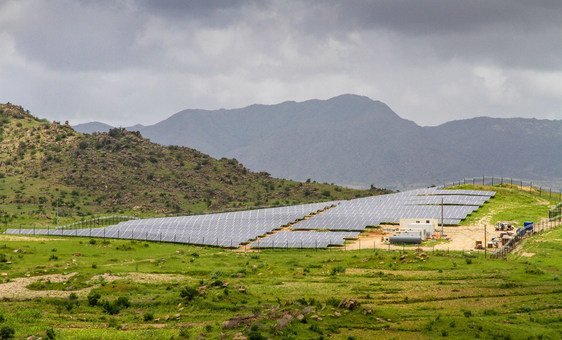 **UNDP Eritrea/Elizabeth Mwaniki**
Money, they say, makes the world go round. The same can be said about money and climate action. Whether it is climate adaptation, mitigation, or loss and damage, it all comes down to the availability of climate finance—money—to make things happen! Little wonder establishing a loss and damage financing facility was a major bone of contention at the recent United Nations Climate Change Conference (COP27) in Egypt last year. However, at COP27, several initiatives that were meant to yield climate finance were launched. One of which was the African Carbon Markets Initiative (ACMI).
In over 140 nations, UNDP supports action on climate adaptation in partnership with the Global Environment Facility and the Green Climate Fund. In Timor-Leste, women engineers and local construction companies are developing climate-resilient infrastructure that will benefit 15 percent of the population. In Tuvalu, state-of-the-art airplane-mounted technology known as LIDAR has collected detailed baseline information on marine hazards and coastal processes that will be invaluable in adapting to rising seas.
(UNDP): 10 AM in Anuradhapura, the sun is glaring down on the agricultural heartland of the country and the air hangs dry—there hasn’t been any rain in weeks despite it being the rainy season in the Dry Zone.
The farmer communities look to the skies, awaiting the rains, especially concerning from the perspective of the country’s glaring food security issues. In addition to the compounding climate change-related impacts on agriculture are the ongoing economic crisis impacts in Sri Lanka.
The fuel crisis, the lack of fertilizer and increasing costs of necessary agricultural inputs like seeds and fertilizer are dampening yet another season’s cultivation.
Project link.
Sri Lanka: Saving grace for smallholder farmers
The results of this project over the years has proven to be the saving grace of the smallholder farmers in the Dry Zone, as the country grapples with the multidimensional crisis. Junctures of crisis, like in Sri Lanka, posit the most opportune time to demand a different, better, inclusive, and more resilient future, especially one that puts people first. And, the CRIWMP’s integrated water management model, particularly its climate-smart agriculture programming outlines a blueprint for reviving the stagnant rural economy, ensuring food security, and sustaining the livelihoods that maintain Sri Lanka’s domestic food production—a crucial need as Sri Lanka embarks on its green recovery.
Project link.
Bhutan : The country in the past 16 years developed around 26,886 acres of land to enable farmers to enhance farm productivity without degrading land resources.
Haka Drukpa said that the agriculture land management interventions were tested in these gewogs and it was found relevant to the Bhutanese context and some modifications were made to suit the country’s context.
In 2013, the programme received support from the Bhutan Trust for Environment Protection and the United Nations Convention to Combat Desertification.
The programme is also carried out through UNDP’s GEF small grants programme.
Doha: The National Human Rights Committee (NHRC) has announced that it will organise an international conference on ‘human rights and climate change’ from Feb 21-22.
It will be held in partnership with the United Nations High Commissioner for Human Rights, the United Nations Development Program (UNDP), the League of Arab States, and the Global Alliance of National Human Rights Institutions.
Sri Lanka : Addressing Sri Lanka’s food security needs
A small walk away from Champika’s house is Shirley Perera’s field. Shirley too echoes the same woes. “Usually we cultivate corn because of its commercial value. But because of the increasing prices and shortage of fertiliser, we have completely dropped the cultivation of corn.” Champika and Shirley are two of 5,200 vulnerable farmers benefiting from seed support, having been identified as possessing limited resources to cultivate 2,600 acres of uncultivated land the Citi Foundation’s collaboration with UNDP Sri Lanka’s ‘Individual and Private Sector Giving Facility for Emergency Relief’ established back in June 2022. In addition to the seed support, multiple community awareness programs on seed distribution, agro-met advisories and farmer mobilisations to improve the eco-system were also carried out through the intervention.
Project link.