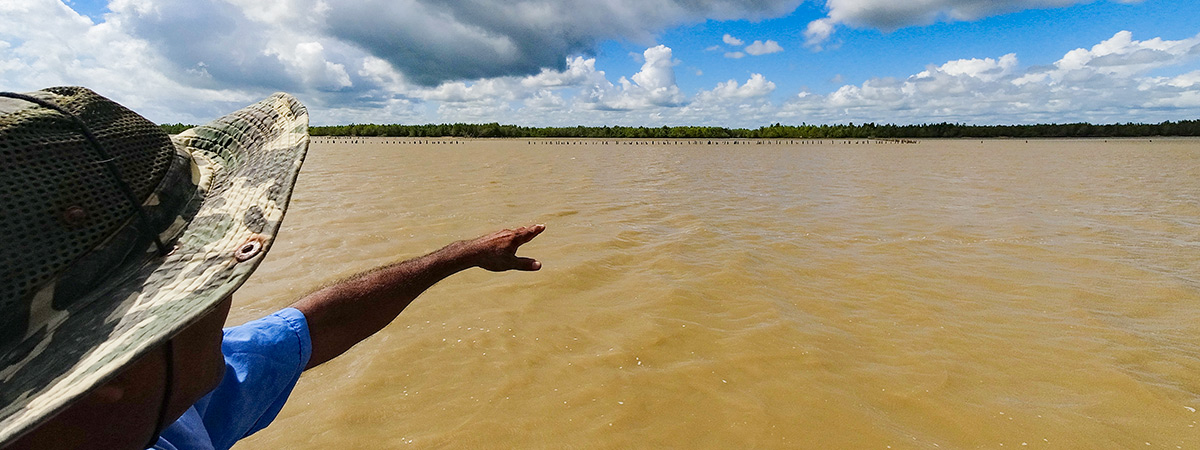
Photo:
Suriname is highly vulnerable to climate-related hazards, including floods, droughts, extreme weather events, and sea-level rise. Its extensive coastline, large interior territory, and climate-sensitive economic sectors require reliable meteorological information to support disaster preparedness, climate adaptation, and sustainable development.
However, significant gaps remain in the country’s observation network. Although the Meteorological Service Suriname (MDS) operates weather stations across the country, none of its surface stations or its upper-air station in Paramaribo currently meet Global Basic Observing Network (GBON) requirements, limiting the continuity and reliability of meteorological observations.
Funded through the Systematic Observations Financing Facility (SOFF) and implemented by UNDP alongside the World Meteorological Organization (WMO) in partnership with the Ministry of Public Works and MDS—with the Royal Netherlands Meteorological Institute (KNMI) serving as Peer Advisor—this four-year project aims to strengthen Suriname’s meteorological observation infrastructure and institutional capacity to achieve GBON compliance.
The project will upgrade and align five existing surface stations located at Nickerie, Zanderij, Tafelberg, Stoelmanseiland, and Kwamalasamutu (which was initially installed through co-financing from the Government of India), as well as the existing upper-air station in Paramaribo. It will also invest in institutional strengthening, technical training, data management systems, and operational sustainability.
The project is expected to improve national weather and climate services while contributing to stronger regional climate monitoring, early warning systems, and climate adaptation efforts across both the Caribbean and Amazon regions.
- National
- Regional
- Global
The primary institutional beneficiary is the Meteorological Service Suriname (MDS), with broader benefits expected for climate-sensitive sectors, neighbouring countries and users of weather and climate information services.
- United Nations Development Programme (UNDP)
- World Meteorological Organization (WMO)
- Government of Suriname
- Royal Netherlands Meteorological Institute (KNMI)
- Image
- Image
- Image
- Image
The project was developed in response to significant meteorological observation gaps identified through the World Meteorological Organization (WMO) GBON Global Gap Analysis and Suriname’s National Contribution Plan. Despite maintaining a network of automatic weather stations, many stations experience data gaps, several have remained inactive due to financial constraints, and existing infrastructure does not currently meet GBON requirements. Suriname’s large territory, remote hinterland and limited accessibility further complicate efforts to achieve comprehensive observation coverage.
The project’s theory of change is based on the premise that strengthening observation infrastructure, institutional systems and human capacity will enable Suriname to meet GBON standards and sustainably share high-quality meteorological data nationally, regionally and globally. Investments will focus on upgrading five surface stations and one upper-air station, improving communications and data management systems, strengthening operations and maintenance arrangements, and building technical and leadership capacities within Meteorological Service Suriname (MDS).
The proposal places strong emphasis on long-term sustainability by developing institutional capacities to package climate information, use forecasting models, establish operational plans, improve maintenance systems and explore public-private partnerships. It also seeks to strengthen regional collaboration through enhanced data sharing and coordination with regional climate and early warning initiatives, including the Caribbean Institute for Meteorology and Hydrology (CIMH), CREWS and CARICOF. By doing so, the project will strengthen weather forecasting, climate monitoring, climate services and early warning systems across Suriname while contributing to climate resilience efforts in the wider Caribbean and Amazon regions.
Benjamin Larroquette, Global Advisor Early Warning Systems and Regional Technical Specialist, UNDP benjamin.larroquette@undp.org
Bryan Drakenstein, Country Programme Specialist, UNDP bryan.drakenstein@UNDP.org