
Across Cambodia, small backyard gardens play a vital role in feeding families and supporting local livelihoods. Farms of less than two hectares produce more than 70 percent of the food calories consumed in Asia and sub-Saharan Africa. In Cambodia, these backyards are central to daily life, offering essential crops and income for rural communities.
In the south of the country, farmers increasingly face the pressures of drought and heavy rainfall. By 2040, this region will see the greatest increase in rainfall in the country, and by 2050 it is expected to become Cambodia’s hottest area, with many days registering above 35°C. These changing conditions put traditional backyard farming at risk.
To help communities adapt, the Livestock Development for Community Livelihood Organization (LDC), a Cambodian NGO, is working closely with farmers to introduce new climate-resilient solutions. With support from the UNDP-Adaptation Fund Climate Innovation Accelerator (AFCIA), LDC has developed floating cricket farms and resilient chaya gardens. Since 2023, 200 farmers have been trained in these new practices.
“I am so happy with my job. It’s not only providing income, but also nutrition. Since I have my own cricket farm and chaya garden, my family has increased frequency of eating cricket and chaya top from once in every few months to once every week.” – Uy Oun, farmer from Kraom village, Takeo province
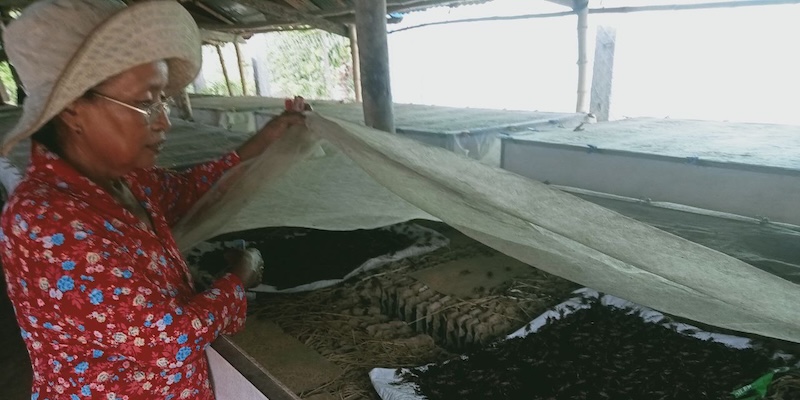
Uy Oun, a trained cricket farmer in Kraom village, shows her crickets growing in the pen. Photo: LDC
Growing new opportunities
One hundred new farms have now been established across seven villages in the Takeo, Kampot and Kandal provinces. Together they have produced and sold 12 tonnes of crickets and chaya. Early results show strong income potential: farmers with up to 10 pens can earn as much as US$4,350 per year.
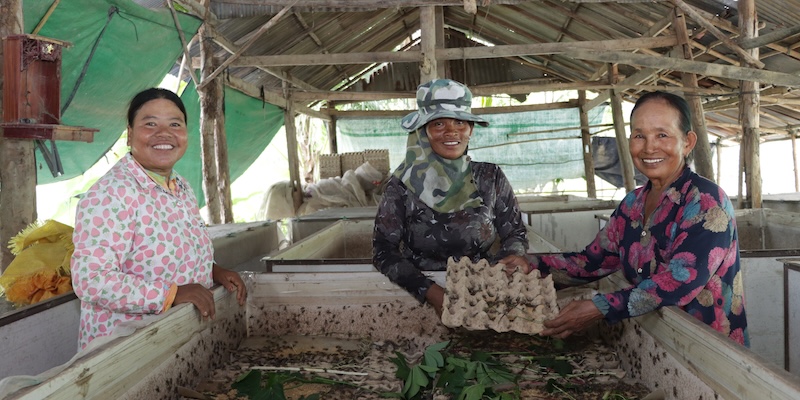
Women leaders visit a cricket's farm after a training session. Photo: LDC
Crickets and chaya
Chaya—a hardy green leafy plant often called tree spinach—grows well in Cambodian backyards and is naturally resilient to both drought and floods. Its fresh leaves are high in protein, calcium, iron and vitamins A and C, being more nutritious than many common leafy vegetables.
Crickets also play an important role in sustainable food systems. They are rich in protein—up to 59 percent—and are a proven source of vitamin B12. They are easy to raise and fit naturally into existing backyard practices.
In Cambodia, crickets and chaya complement each other perfectly. Chaya leaves can be used as feed, while cricket frass—an organic by-product—helps fertilize the chaya plants, creating a circular, low-waste system.

Crickets are very rich in protein and vitamins. Photo: LDC
Farmers harvest fresh crickets every 45 days, producing at least 20 kilograms per cycle. Families are encouraged to cook with both crickets and chaya at home. Many households enjoy adding fried crickets and chaya to noodle dishes, while the remaining harvest is sold for income.
Each cricket pen can generate about $71 every 45 days. With support from UNDP-AFCIA, LDC provides two pens to each new farmer, with additional pens costing $10 each.
“I manage four pens and spend an average of 15 minutes per day on their upkeep. I can now work from home, earning a regular income.” – Chhay Phien, farmer from Prek Hour Lech village, Kandal province
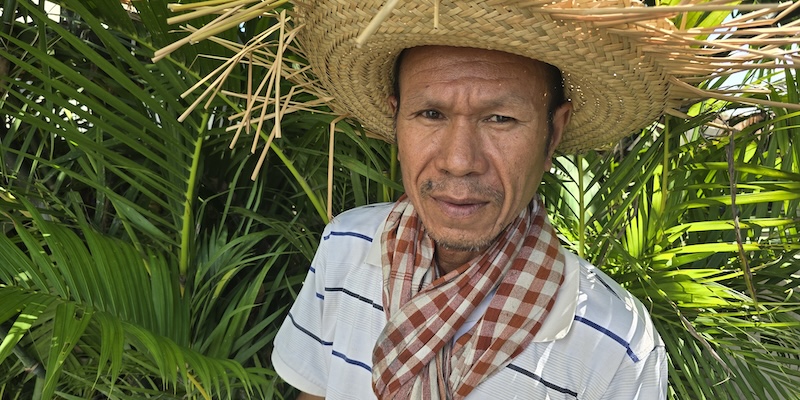
Chhay Phien, a trained cricket farmer in Prek Hour Lech village and proud owner of four pens. Photo: LDC
Cricket farming requires minimal daily labour, making it an ideal activity for elderly farmers or women balancing childcare, household responsibilities and work.
Upscaling the initiative
Strong market demand is helping to scale up cricket and chaya production. LDC works with women’s groups and agri-food enterprises (AFEs) to expand markets for the farmers’ produce. Women-led storage centres collect crops from many small farmers and sell them in larger quantities to the enterprises.
“We want to scale up. The cooperatives can’t supply enough crickets to meet demand from agri-food enterprises. So, we want to increase production!” – Phalla Miech, Director of LDC
AFEs handle processing and prepare products for sale in Asian and European markets, where demand is growing. The nutritional value of crickets and the rising concern about emissions from traditional livestock are strong drivers. It is estimated that the global cricket market could reach $3.5 billion by 2029.
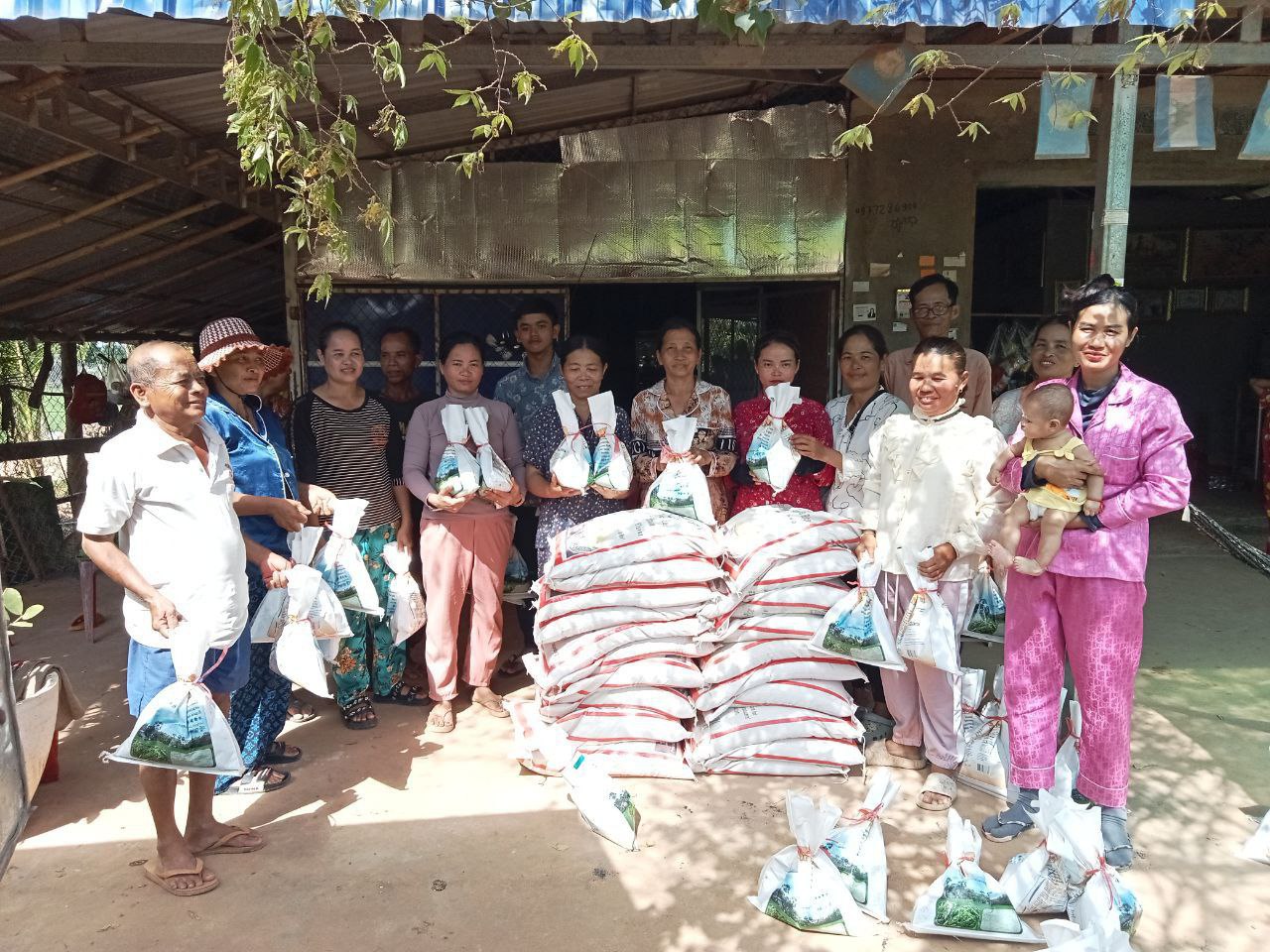
Feed and cricket egg distribution from a storage centre in Dang Tong village, Kandal province. Photo: LDC
Building resilient communities
Through partnerships that link small-scale farmers with agrifood enterprises, LDC is helping to build a strong network of climate-resilient livelihoods. These efforts support household wellbeing, diversify income and strengthen local food security at a time when climate impacts are increasingly felt.
From backyard cricket farms to expanding market opportunities, communities are showing how local innovation can create sustainable and resilient futures across Cambodia.
Supported by financial contributions from the Adaptation Fund and the European Union, the UNDP-AFCIA programme has awarded 44 micro and small grants to locally led organizations across 33 countries worldwide, accelerating their innovative solutions to build resilience in the most vulnerable communities.
UNDP-AFCIA is one of two featured programmes under the Adaptation Innovation Marketplace (AIM), a multi-stakeholder strategic platform that promotes scaled-up adaptation at the local level.