

In Senegal's Niayes region, Aby has spent twenty years watching the weather around her change. As a producer and processor of fruits and vegetables — tomatoes, onions, lettuce, cassava, hibiscus, mangoes, depending on the season and the market — she has seen the rains grow scarcer, the water levels in local boreholes sink deeper each year, and the heat turn more intense.
To keep her business alive, she has had to diversify what she grows and how she grows it. About ten years ago, she and other women came together to form a women-led agricultural group, turning to agroecology — recycling organic matter, using fewer chemical inputs, and finding ways to retain what little water the sandy Niayes soils can hold.
Today, she and the other members of the group sell their produce with support from Senegal's National Federation for Organic Agriculture (FENAB) and have built a small processing unit where members turn produce into juices and jams for local markets. The quality is there. So is the demand — more, in fact, than the group can currently meet. What they lack is the capacity to process more, and the means to do it without energy costs eating into their margins. In a niche market for organic fresh produce, adapting quickly enough to cut losses and generate income for families — and reinvestment — is not optional. It is survival.
Aby Beye, Coordinator, Takku Liggey women’s group: "Access to finance would allow us to build a processing unit and establish a livestock farm, helping us increase production, add value to our products, diversify our income and build a more resilient business.”
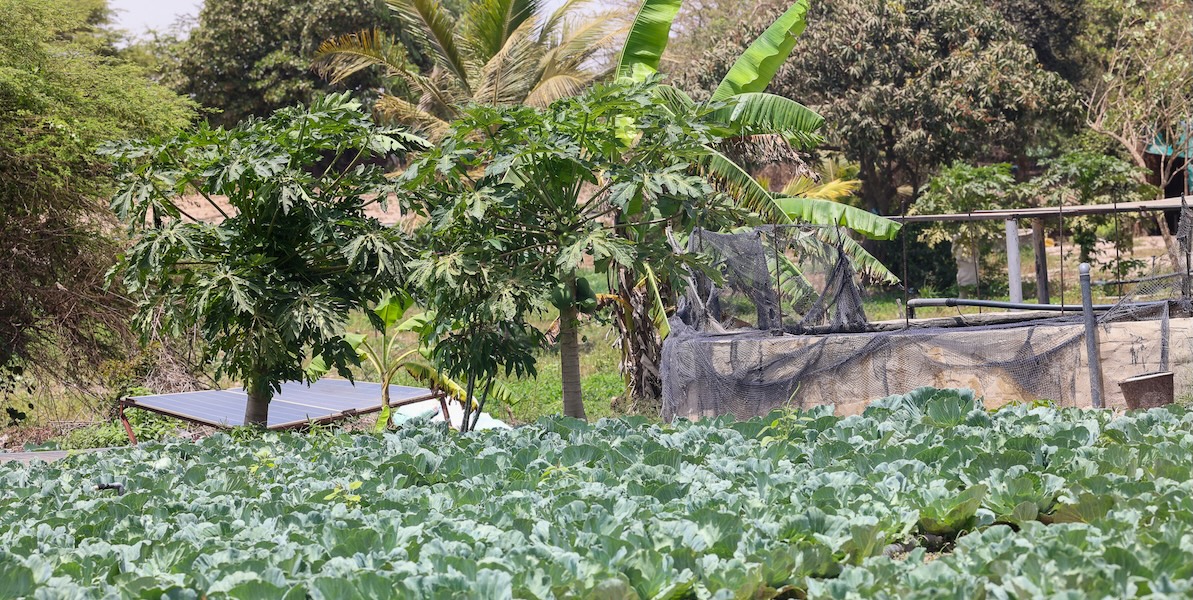
Aby's experience points to a wider challenge for climate adaptation in agriculture: women-led agricultural associations are already investing in practices that make their production, businesses and livelihoods more resilient to climate change, but without access to appropriate finance, they can struggle to sustain and scale those investments. The question is not only why adaptation finance is so scarce, but also why it is so hard for women to access what little of it there is. This is the gap that the FAO-UNDP SCALA programme is working with partners to address in Senegal.
Through its partnership with La Banque Agricole (LBA), Senegal's leading financier of agricultural small and medium-sized enterprises (SMEs) and farmers, SCALA supported the development of a climate finance project that includes a dedicated credit line for transformative agroecological practices. As a critical next step, SCALA is now working to help women-led farming associations to address the barriers that have historically prevented them from accessing finance, helping ensure that available climate finance reaches the women and small businesses.
The focus is not simply on making credit available, but also on building a pathway that enables women associations to become ready to receive finance while helping financial institutions better understand and respond to their needs. It seeks to demonstrate that agroecology practices can strengthen resilience to climate risks while creating viable and profitable business opportunities for women and attractive investment opportunities for financial institutions.
This approach directly supports SCALA’s objective of scaling up NDC implementation through transformative climate action. By facilitating investment in climate-resilient and low-emission agriculture practices, the initiative contributes to Senegal’s adaptation and mitigation priorities under its NDC.
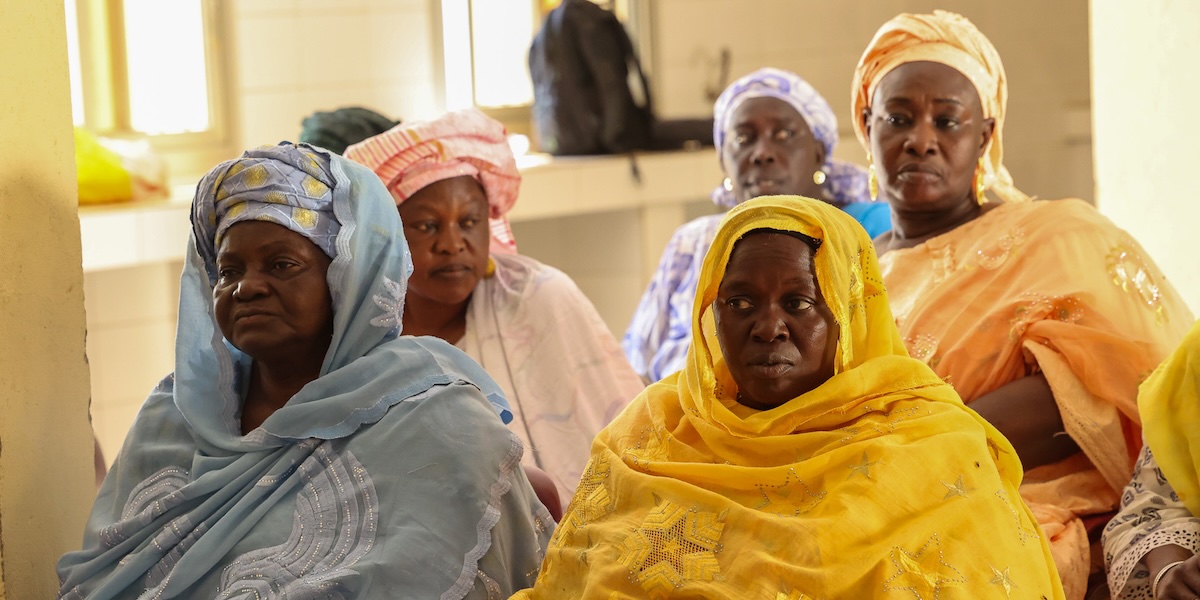
On May 2026, Aby made her way to the cooperative's premises in Darou Khoudoss, where a meeting was underway between women entrepreneurs, La Banque Agricole (LBA) and SCALA representatives. There, she and other women entrepreneurs were able to discuss their projects, the challenges they face, and what it would take to make their investments bankable. It was, she said, the first time she had seen a bank come to them — to listen, to advise, and to exchange ideas with other economic interest groups also committed to agroecology.
Bertrand Reysset, Climate Change Adaptation Specialist, UNDP: “Public institutions and international partners play a critical role in bridging the gap between financial institutions and women-led associations, facilitating knowledge exchange and creating the conditions for investment.”
Aby's group is one of eight women-led associations selected through a maturity assessment for tailored support to improve access to finance as part of the SCALA programme. As an intermediate-maturity group, it has relatively regular revenues and links to institutional resources but requires support to structure its investment project and access credit to scale up its activities. Lower-maturity groups will first receive support to strengthen financial literacy, financial management and organizational capacities before moving to project structuring and finance readiness.
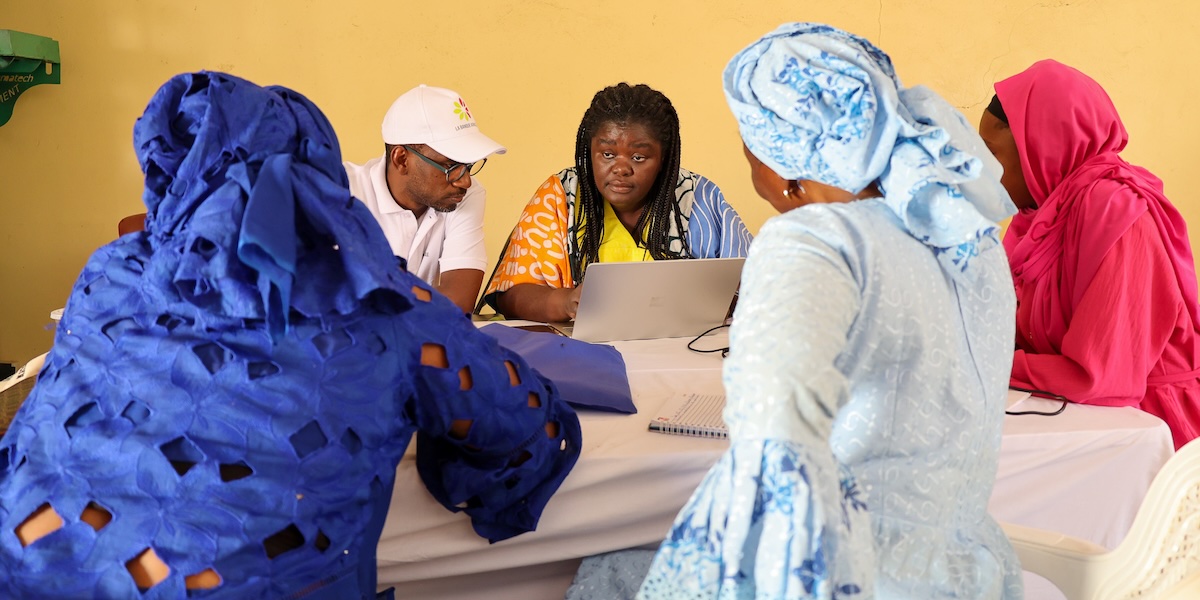
The groups are part of FENAB's wider network of 5,000 members across 67 organizations and include associations working in market gardening, millet and groundnuts. This initiative uses what its team calls a “champion” model: rather than trying to support all members at once, it works first with the associations that are furthest along, identifying the most mature groups as “champions” and providing them with the technical support needed to prepare the financial documentation required for bank loan applications. The aim is for early results to show what is possible and encourage others to follow.
Viviane Umulisa, Climate Change Expert, FAO: “Climate-resilient agriculture activities at local-level are at different stages of investment readiness: some already show strong business potential, while others need support to better structure their activities. Supporting the most advanced groups to access finance and scale up can demonstrate what is possible and create pathway for others to follow”.
The barriers to formal finance are not only technical. Many women in the Niayes have never dealt with a bank and have good reason to be wary: land titles and other forms of collateral are often not in their names, and many rural women remain unbanked, relying instead on informal savings and credit arrangements.
Ibrahima Seck, Coordinator, FENAB: “Many women say they were afraid of bankers, because usually when they see bankers, they come to take their belongings if a debt isn't repaid. Women need technical capacity, financial education and trusted relationships with banks. Building these foundations is essential to turn access to finance into a real opportunity for women-led businesses.”